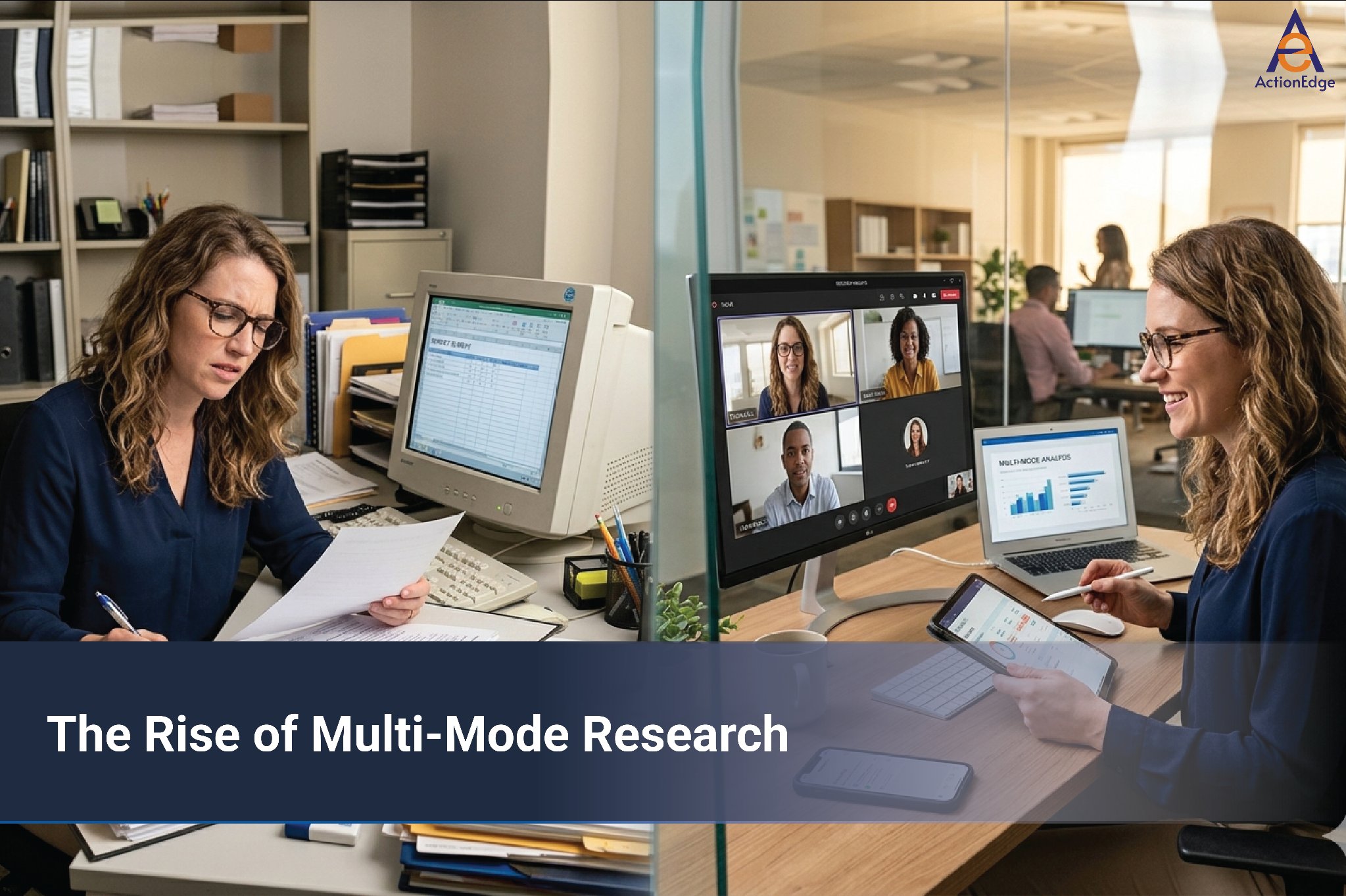
A survey link used to be enough. Today, it often gets ignored.
Consumers are busier, attention spans are shorter, and expectations around digital experiences have changed dramatically. In 2026, people interact across multiple screens, channels, and formats throughout the day. Yet many brands still rely on one-dimensional surveys to understand complex decisions. That gap is becoming costly.
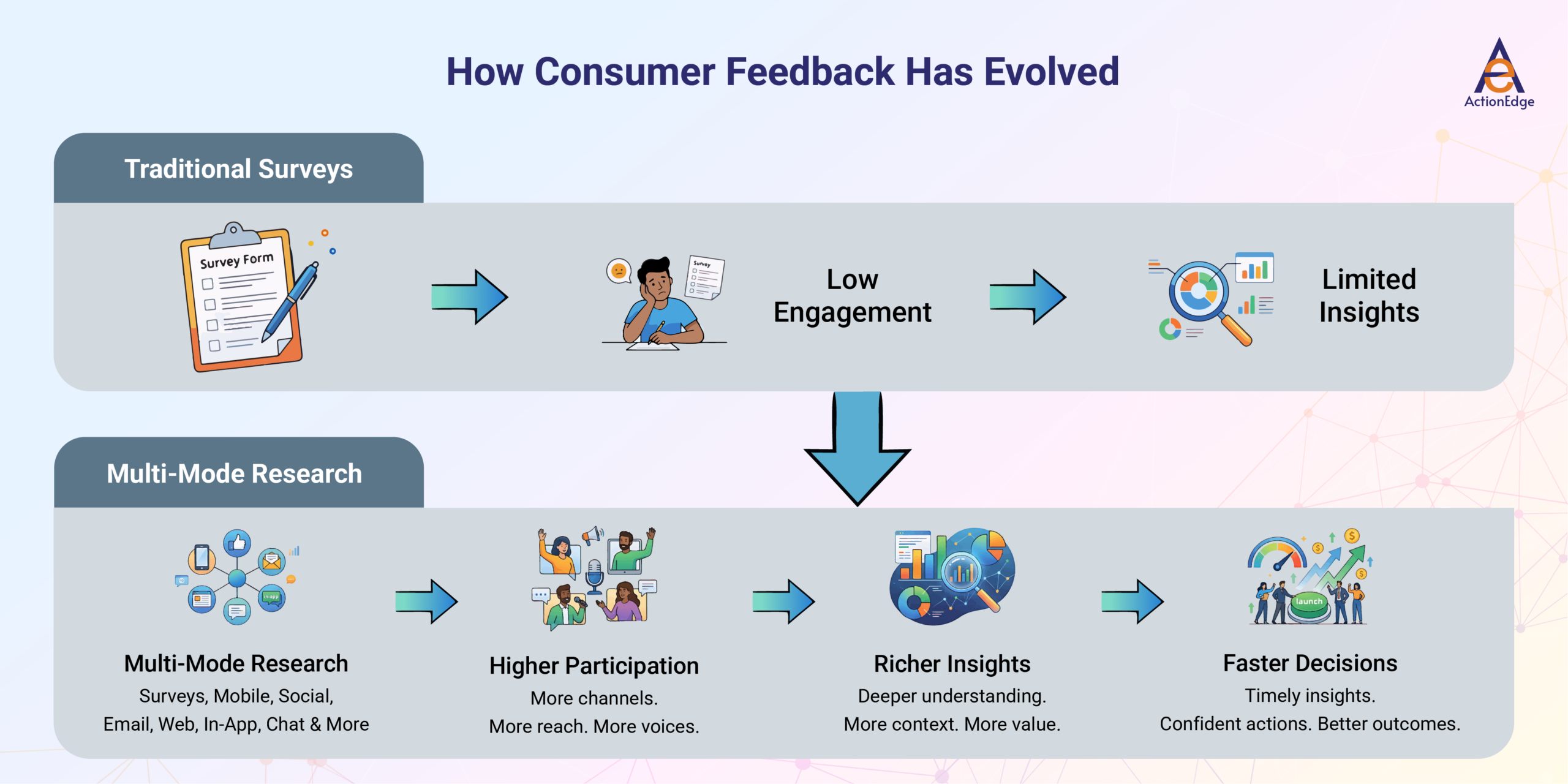
Traditional surveys remain useful for measuring awareness, satisfaction, or preference at scale. But when businesses need to understand why customers hesitate, what drives switching behavior, or how people behave in real time, surveys alone can fall short. Low response rates, rushed answers, and surface-level feedback are now common challenges.
This is why multi-mode research is gaining momentum. By combining methods such as phone, web, video, mobile, and qualitative conversations, brands can gather deeper, faster, and more reliable insights. The future of research is no longer about asking a single set of questions in a single format. It is about meeting respondents where they are and understanding them more completely.
What Is Multi-Mode Research?
Multi-mode research is an approach that uses multiple methodologies or channels within a single study to improve data quality, reach, and depth of insight. Instead of relying on a single survey format, it blends methods based on the audience, objective, and business challenge.
Examples include:
- Phone interviews for niche or hard-to-reach audiences
- Web surveys for scale and speed
- Video interviews for emotion and visual context
- Mobile diaries for in-the-moment reactions
- In-person interviews for observational depth
Unlike single-method surveys, this model is flexible. It adapts to respondent behavior rather than expecting respondents to adapt to the research process. That makes participation easier and insights stronger.
Limitations of Traditional Surveys
Traditional surveys still have value, but they also come with clear limitations in today’s environment.
1. Low Engagement and Response Rates
Many respondents ignore survey invitations or abandon questionnaires midway. Long forms, repetitive grids, and poorly timed outreach reduce participation.
2. Surface-Level Insights
Surveys often capture stated opinions, but not always real behavior. Someone may claim they prefer premium quality, then choose the lowest-priced option when making an actual purchase.
3. Survey Fatigue and Bias
Frequent survey requests create fatigue. Respondents may rush through questions, select the first acceptable option, or provide socially desirable answers rather than honest ones.
4. Lack of Context
A score alone rarely explains motivation. Knowing a customer rated an experience 6 out of 10 does not reveal what caused frustration or how to fix it.
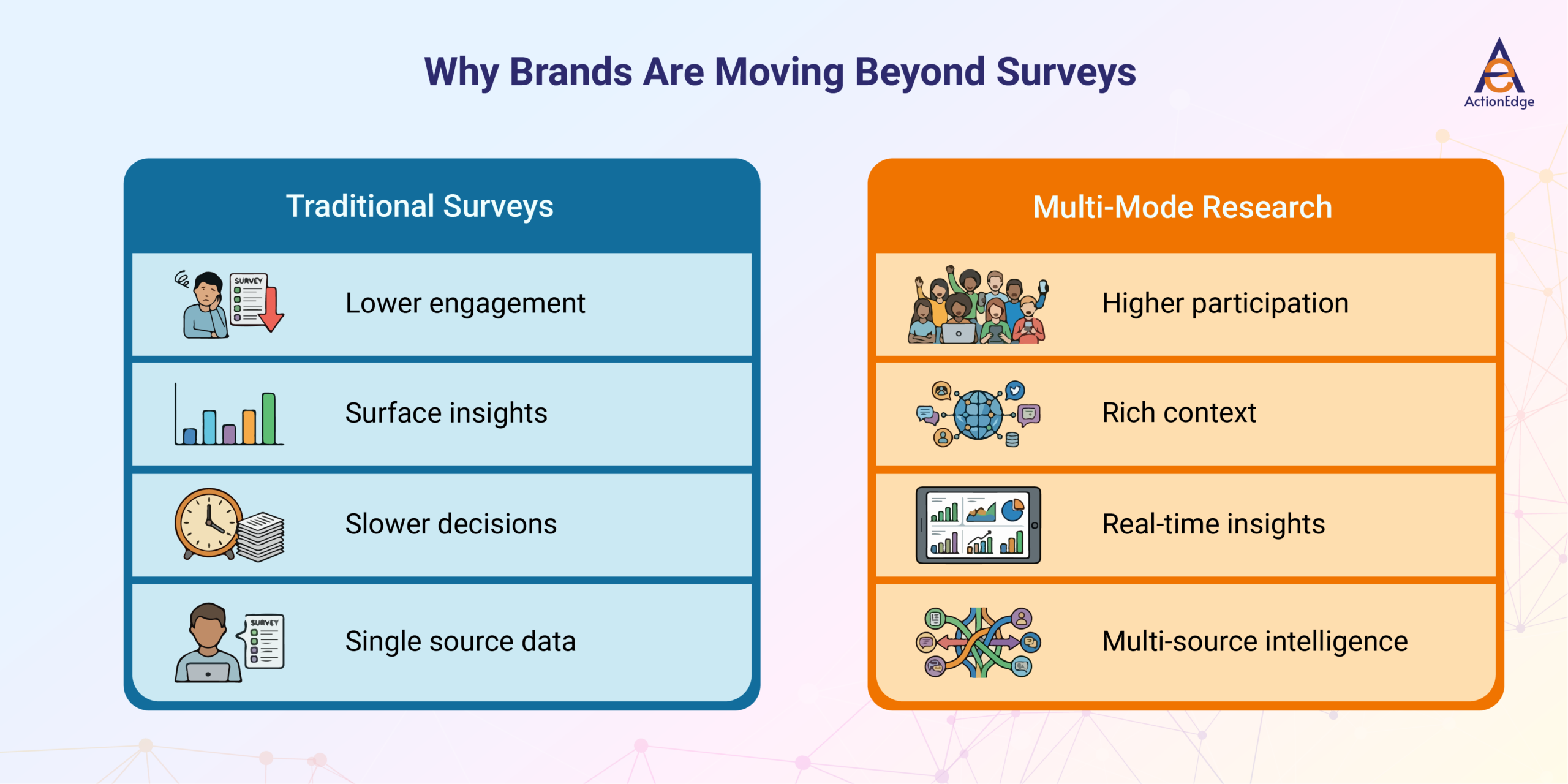
This is where the comparison between traditional surveys vs multi-mode research becomes increasingly important for modern businesses.
Why Multi-Mode Research Is Gaining Momentum
Businesses today need insights that are faster, richer, and more adaptable.
1. Flexibility in Data Collection
Different audiences respond differently. Younger users may prefer mobile-first formats, while senior decision-makers may respond better to scheduled phone conversations.
2. Reaching Diverse Segments
One method rarely fits all. Multi-mode designs help include urban, rural, digital-native, and low-tech audiences within one research framework. This improves representativeness and reduces blind spots.
3. Better Participation Quality
Respondents are more likely to engage when the format feels convenient and relevant. That often leads to stronger completion rates and more thoughtful responses.
4. Real-Time Adaptability
Modern studies can adjust questions, routes, or stimuli in real time based on live feedback while fieldwork is still active. This helps researchers improve outcomes without waiting until the project ends.
5. Stronger Decision Confidence
When multiple evidence sources point in the same direction, stakeholders gain greater confidence to act.
Key Components of Multi-Mode Research
Successful studies combine several dimensions of insight gathering.
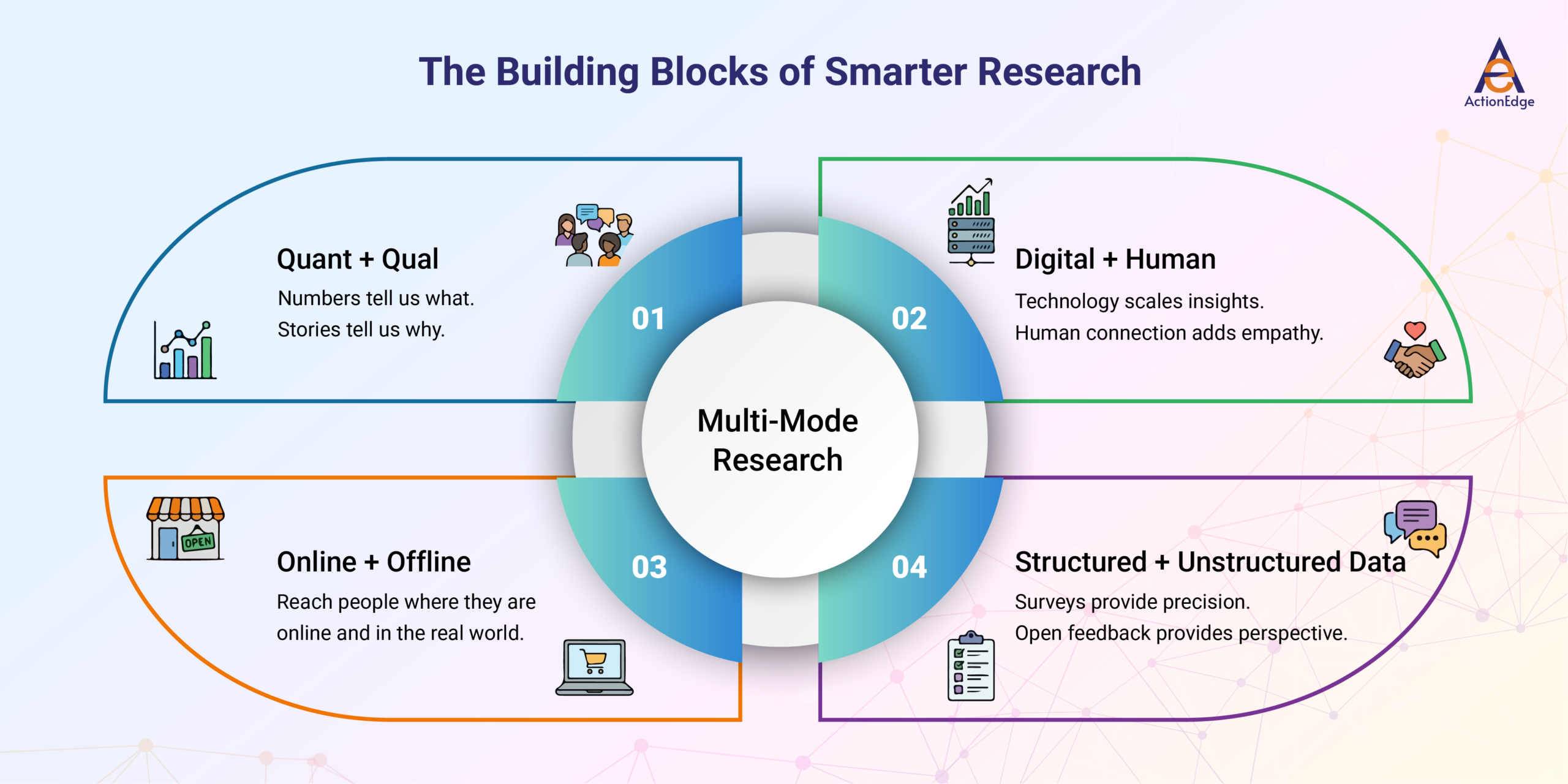
1. Quant + Qual Together
Blending quantitative and qualitative research creates both scale and depth. Numbers reveal patterns, while conversations explain causes.
2. Digital + Human Interaction
Automation speeds execution, but human moderation adds nuance, empathy, and the ability to probe deeper when something interesting emerges.
3. Online + Offline Touchpoints
Web-based methods can be paired with offline recruitment or phone validation to improve representation.
4. Structured + Unstructured Data
Closed-ended answers, transcripts, video clips, click behavior, and open comments together provide a fuller picture than any single source can offer.
This is why many leading brands now see multi-mode studies as a form of hybrid market research that balances efficiency with intelligence.
Role of Advanced Methodologies
Modern research quality often depends on the right methodology mix.
1. In-Depth Exploration
In-depth interviews (IDI) help uncover emotions, hidden barriers, and decision triggers that surveys may miss. A customer may say they dislike a banking app, but an interview reveals trust concerns rather than usability issues.
2. Real-Time Interaction
Phone to web research (P2W) allows respondents to discuss concepts while simultaneously viewing products, pricing, websites, or prototypes online. This creates faster and more contextual feedback loops.
3. Screen-Based Observation
Phone to web via screen access (P2W SA) goes further by enabling researchers to observe how respondents navigate apps, compare features, or complete tasks. This is especially valuable in UX, e-commerce, and digital journey testing.
4. Behavioral Validation
Tracking browsing paths, completion behavior, or interaction drop-offs can validate or challenge claimed responses.
5. Video and Mobile Methods
Self-recorded videos and mobile diaries capture reactions in natural settings, adding authenticity that traditional surveys rarely achieve.
Benefits Over Traditional Surveys
The strongest reason brands are shifting methods is results.
- Richer Insights: Instead of just knowing what happened, businesses learn why it happened.
- Better Accuracy: Using multiple methods reduces overreliance on a single data source and helps minimize bias.
- Higher Engagement: Respondents are more likely to participate when offered convenient formats.
- Faster Decisions: Parallel data collection methods can shorten timelines and accelerate reporting.
- More Actionable Outcomes: When findings include behavior, sentiment, and context together, teams can act with far greater precision.
When decisions involve pricing, product design, trust, or adoption behavior, richer evidence often leads to smarter outcomes.
Challenges & Considerations
Multi-mode research offers advantages, but it must be designed carefully.
1. Data Integration Complexity
Combining multiple streams requires thoughtful frameworks, aligned metrics, and consistent analysis standards.
2. Cost vs Value
It can cost more than a basic survey, but the value of stronger decisions often outweighs the added spend. Poor decisions are usually more expensive than better research.
3. Skilled Moderation
Qualitative sessions and adaptive studies require experienced researchers who know how to probe, listen, and interpret accurately.
4. Privacy & Compliance
Consent, storage, and data handling must align with regulations and respondent expectations. Trust is essential in modern research.
How ActionEdge Can Help
At ActionEdge, we help brands move beyond one-size-fits-all research. As a trusted market research company, we design custom studies built around real business questions, not outdated templates.
Our team combines IDIs, digital methods, and advanced mixed-mode designs to uncover what customers truly think and do. We regularly integrate the P2W-SA approach for richer concept testing, product feedback, customer journey mapping, and communication testing.
Our market research service is built for speed, quality, and actionability. Whether you need automotive insights, BFSI trust studies, healthcare feedback, or product validation, we tailor the framework to your market and decision timeline.
Most importantly, we turn findings into strategies your teams can act on with confidence.
Conclusion
The old model of sending a survey and waiting for answers is no longer enough. Consumer decisions are more dynamic, emotional, and context-driven than ever before.
Multi-mode research is not replacing surveys because surveys failed. It is replacing them because business questions have become more complex. Brands that continue relying on a single method may get answers, but not always understanding. Brands that embrace smarter, blended approaches gain something more valuable: clarity.
That is why hybrid market research is becoming essential for businesses that want sharper insights, faster decisions, and stronger outcomes. In competitive markets, clarity is often the difference between reacting late and leading early.
Ready to move beyond traditional surveys? ActionEdge helps brands design smarter research strategies that turn insights into action. Connect with us to future-proof your decision-making.